

A transformative approach for your brain,
your well-being, and your overall balance
(Grounded in the latest neuroscience research)
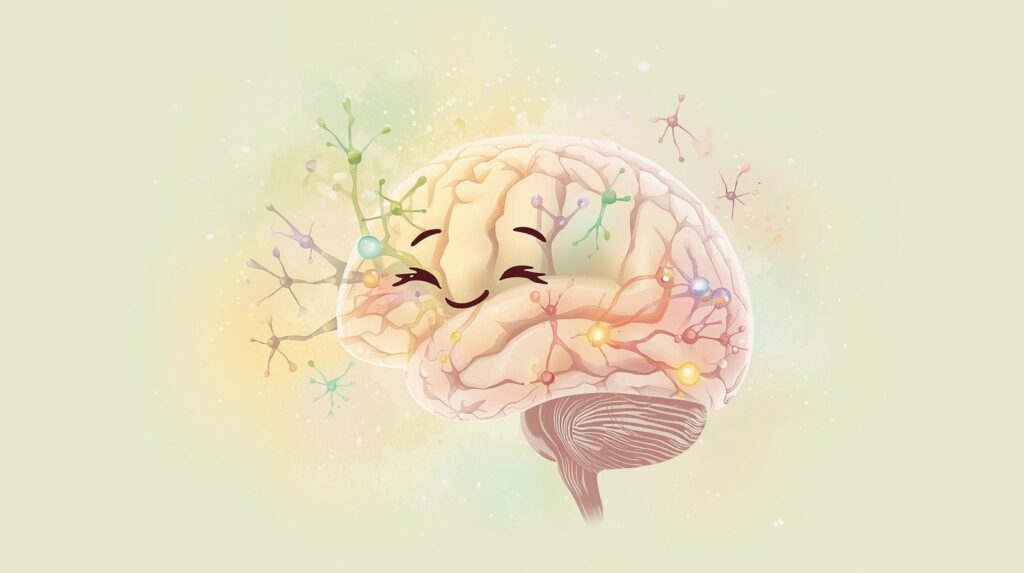
The R.E.N.A.I.S. Method supports the brain’s natural capacity for neuroplasticity and helps create the conditions that encourage neurogenesis in specific areas of the brain.
It is built around 6 essential pillars designed to support the brain’s key regulatory mechanisms on a deeper level:
- Relationships → Safety: the brain feels secure
- Exercise → Activation: the brain comes alive through movement
- Nature → Regulation: the nervous system settles and rebalances
- Aliments → Brain nourishment: the brain is biologically supported
- Innovation → Growth: the brain learns, adapts, and evolves
- Sleep → Regeneration: the brain restores and consolidates itself

In Practice
R.E.N.A.I.S. is based on simple yet effective techniques designed to fit naturally and sustainably into daily life:
- Simple routines
- Supportive lifestyle habits
- Emotional regulation tools
- Cognitive stimulation practices
There is no harsh transformation here, and no pressure to become someone else — only progressive, realistic adjustments that respect your own pace.
By working gently and consistently across these different areas, you naturally support your cognitive abilities, emotional balance, and energy levels.
So you can move through life with greater clarity, stability, and presence.
The R.E.N.A.I.S. Method
– R – Relationships
– E — Exercise
– N — Nature
– A — Aliments & nutrition
– I — Innovation
– S — Sleep
Choosing the R.E.N.A.I.S. Method means choosing a deep, sustainable, and compassionate approach that respects your personal rhythm.
It means learning to understand your brain so it can become a true ally in your daily life.
Rather than chasing quick fixes, you build strong and lasting foundations that support your well-being over time.
Each pillar works in synergy with the others, creating a cumulative effect on your mental, emotional, and cognitive balance.
By gradually integrating these six pillars into your daily life, you create conditions that support greater well-being, personal growth, and sustainable vitality — without pressure, but with consistency and intention.
You do not need to change everything overnight..
You simply need to begin.
What if today were the day?
R — Relationships — Creating Safety for the Nervous System
Relationships nourish, stimulate, and shape the brain.
By activating complex neural pathways linked to emotions, empathy, language, and social understanding, meaningful human connection creates an essential environment for the development of new neurons.
The brain thrives through connection. Human interactions stimulate the release of oxytocin and dopamine, strengthening neural pathways and creating biological conditions that support neuroplasticity.
By lowering cortisol — the body’s primary stress hormone — and helping regulate the nervous system, healthy relationships can also help protect against cognitive decline.
The richness of social interaction — eye contact, tone of voice, facial expressions, spontaneity, emotional attunement — activates multiple neural networks involved in adaptation, learning, and mental flexibility.
Feeling socially connected creates a safer and more open internal state, one that supports confidence, motivation, emotional security, and cognitive growth.
Cultivating meaningful relationships — through listening, sharing, connecting, and authentic presence — creates ideal conditions for strengthening both emotional and cognitive resilience.
What matters most is not the number of relationships, but their quality, emotional safety, and depth.
A stronger sense of belonging emerges, mood improves, and the brain becomes more resilient.
Connecting with others also helps your brain evolve.
E — Exercise — Activating the Brain
Movement stimulates, strengthens, and transforms the brain.
By increasing blood flow, oxygen supply to the brain, and the production of BDNF — a key protein involved in neuronal growth, survival, and connectivity — physical activity creates optimal conditions for neurogenesis.
Exercise also helps lower stress and cortisol levels, allowing the brain to move out of survival mode and into a state more favorable to neuroplasticity.
Movement activates multiple neural circuits simultaneously, reinforcing existing connections while creating new ones through coordination, rhythm, balance, effort, and adaptation.

Engaging the body also supports a more stable and energized mental state — one that promotes focus, mental clarity, and emotional regulation.
Ideal: a combination of cardio and coordination-based movement (20–30 minutes several times a week: brisk walking, cycling, running, dancing…).
Regular physical activity creates ideal conditions for strengthening both cognitive and emotional functioning.
What matters most is not performance, but consistency and enjoyment — two powerful drivers of long-term brain health. Memory and attention improve, and mood becomes more stable.
Moving your body means activating your brain and supporting its long-term evolution.
N — Nature — Calming and Restoring
Nature soothes, restores, and transforms the brain.
By combining calming effects, sensory stimulation, and mental openness, nature creates ideal conditions for neurogenesis.
As stress and cortisol levels decrease, the brain gradually exits survival mode, allowing restorative and adaptive processes to reactivate.
Contact with nature encourages a calmer, more open mental state — one that supports creativity, insight, emotional regulation, and learning.
Mood improves. Attention is restored.
Nature’s sensory richness activates multiple neural pathways through:
- Varied sounds
- Shifting colors
- Textures
- Scents
- Unpredictable movement
Regular exposure to nature creates ideal conditions for strengthening emotional and cognitive balance.
- Spend time in natural light
- Move your body outdoors
- Explore different environments
- Slow down
Nature is not a luxury.
It is a powerful regulator for your nervous system and a remarkable ally for brain health.

A — Aliments — Nourishing the Brain
Nutrition nourishes, protects, and supports the brain’s evolution.
Food provides the biological foundation necessary for the growth, survival, and communication of neurons.
A nutrient-rich way of eating — particularly inspired by the Mediterranean approach — supports neuroplasticity, reduces inflammation and helps protect the brain against cognitive decline.
Certain nutrients play a particularly important role in brain function.
DHA, an essential omega-3 fatty acid:
- supports communication between neurons
- helps protect against oxidative stress
- contributes to memory and cognitive performance
By stabilizing blood sugar levels and supporting nervous system regulation, nutrition helps maintain steady mental energy and optimize cognitive functioning.
Nutrition also influences the gut microbiome, which communicates directly with the brain and plays a role in mood, emotional balance, and adaptability.
A varied, balanced, minimally processed diet creates ideal conditions for strengthening emotional and cognitive resilience:
- whole foods
- colorful foods
- quality ingredients
- omega-3-rich foods
What matters most is not perfection, but consistency, quality, and awareness in your choices.
Energy becomes more stable, concentration improves, and the brain functions more efficiently.
Nourishing your body also means nourishing your brain.
I — Innovation — Stimulating Adaptation and Growth
Novelty stimulates, awakens, and transforms the brain.
By activating mechanisms linked to learning, adaptation, and neuroplasticity, stepping outside your comfort zone helps create conditions favorable to neurogenesis.
Breaking routine activates unfamiliar neural circuits, challenges the brain to adapt, and encourages the creation of new connections.
The brain is naturally drawn to novelty. New experiences stimulate dopamine release — a neurotransmitter closely linked to motivation and learning — strengthening neural pathways and helping anchor new experiences more deeply.
Exploring unfamiliar situations — learning, discovering, experimenting, challenging yourself —:
- activates diverse cognitive networks
- strengthens memory
- improves mental flexibility
- supports creativity
Novelty awakens curiosity and the desire to learn, strengthening the brain’s cognitive reserve against ageing.
The brain remains:
- active
- adaptable
- constantly evolving
Introducing small forms of novelty into everyday life creates ideal conditions for stimulating neuroplasticity and supporting emotional and cognitive vitality:
- Learn a new skill or language
- Change small habits
- Explore unfamiliar places
- Visit villages, exhibitions, or museums
- Take on small personal challenges
What matters most is not turning your life upside down, but cultivating:
- curiosity
- openness
- a growth Mindset
Stepping outside routine gives your brain the opportunity to renew itself.
S — Sleep — Restoring and Consolidating
Sleep restores, reorganizes, and transforms the brain
By supporting repair, cleansing, and memory consolidation processes, sleep creates essential conditions for neurogenesis and optimal brain functioning.
During sleep, the brain activates mechanisms fundamental to neuroplasticity: it strengthens useful neural pathways, clears part of the brain’s metabolic waste, and consolidates learning by sorting and storing information and memories.
Deep sleep plays a crucial role in physical and mental recovery, while REM sleep supports memory, creativity, emotional processing, and regulation
By reducing stress and helping rebalance the nervous system, restorative sleep allows the brain to move out of survival mode and function more efficiently.
Sleep also contributes to hormonal balance, which plays an important role in supporting neurogenesis.
True moments of pause throughout the day are equally essential for maintaining mental clarity and cognitive efficiency.
Maintaining a regular sleep schedule and allowing yourself genuine moments of rest —by respecting your biological rhythms, creating an environment conducive to rest and limiting stimulation in the evening— creates the ideal conditions to strengthen your cognitive and emotional abilities.
What matters most is not only the quantity of sleep, but also its quality and consistency. Energy is restored. Focus improves. Mood stabilizes.
Sleeping well gives your brain the opportunity to repair, integrate, and evolve.
If all of this resonates with you and you’d like to explore these topics in greater depth and receive my latest updates and practical tips, you’re welcome to subscribe to my newsletter.
Guaranteed spam-free — I simply don’t have time to write it as often as I’d like! 😉
Une dose de sérénité dans ta boîte mail
Testimonials


Simplify Complexity
Cécile was exactly what I needed. She is incredibly sentsitive, knowledgeable, and experienced, with a beautiful ability to make complex things feel clear, accessible and supportive.
I truly and wholeheartedly recommend her.
Libi C.

Feeling Peace Again
Thank you, Cécile, for the time and care you shared with me. Thank you for this discovery. What a Joy and a Blessing!
I feel deeply at peace tonight, and I truly believe that, beneath the surface, this gentle ritual is already working.
Daphné D.

A Life Transformed
My life has completely changed thanks to you.
Your kind and uplifting coaching helped me regain confidence and made life feel lighter and more joyful. I finally feel like myself again.
Sophie S.

A Journey of Inner Transformation
I truly valued my experience with Cécile. She helped me unlock important parts of my life while guiding me through a deeply meaningful journey.
Thank you, Cécile, for your care, professionalism, and dedication.
Magali C.

Guided Through a Life-Changing Chapter
Thank you, Cécile. Your constant support and heartfelt coaching have meant so much in helping me welcome one of the greatest joys of my life.
I can’t recommend you highly enough!
Alyse G.

Learning to Navigate Myself Better
I would like to express my heartfelt gratitude for the support and guidance you provide through your neuroscience-based coaching.
This awareness has led to a better quality of life. I truly appreciate your dedication.
Aurélie R.

Reconnecting With Myself
After one of the most difficult years of my life, my sessions with Cécile were deeply liberating and incredibly powerful.
I was able to let go of so much accumulated pain, and I left with a genuine physical sense of lightness.
Lu de R.

Changing Old Patterns with Gentleness
Through neuroplasticity, I discovered that it’s possible to deeply transform certain reactions and long-standing patterns I had carried with me for years.
Thank you, Cécile — this work with you has brought me both understanding and relief
Fatim E.

Cécile Calvet
- Master in Neuropsycholinguistics, University Toulouse – Jean Jaurès – France
- Neurosciences certified coach (Brain Academy) – MENSA Member
- Other Training Courses : Energy Rebalancing (Spiritual Activator), EFT (Brad Yates), NLP practitioner, Natur’Ella (Menopause balance – Rafaëlla Tillier)